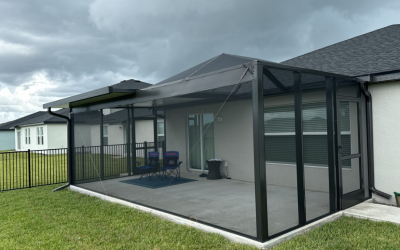
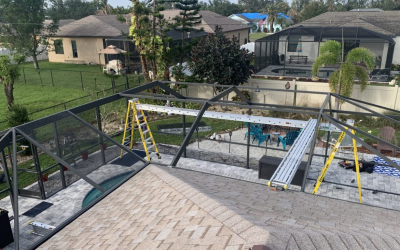
Pool Enclosure Repair or Replacement How to Know What You Need
A good pool enclosure will help you create an environment that is not only comfortable but also safe and easy to use. However, things may sometimes go wrong, with your screens tearing, the panels falling out of place, the doors not shutting, or even some creaking sounds coming from your pool enclosure’s frame. What should you do then?
The right choice depends on the condition of your screens, frame, doors, hardware, and how often the same problems keep coming back. In this guide, we’ll help you decide if you should repair or replace your pool enclosure. We’ll point out warning signs to look for. Plus, we’ll explain when replacement is the better long-term choice.
Pool enclosure repair or replacement: what’s the real difference?
Think of it like maintaining a car. Some problems are “wear items” you replace routinely. Others are structural, when the frame itself is compromised, patching becomes temporary.
Repair is often the best choice when the enclosure is stable, but parts are worn or damaged. Common repairs are screen fixes and rescreening. Screw replacements are also needed. There are targeted fixes after storms or regular wear.
Replacement or major reconstruction is better when the enclosure fails as a system. It makes sense if multiple issues arise, the frame is failing, or the design no longer meets your needs. Pool Enclosures Construction, Repair, & Maintenance and screen enclosure additions are important. They depend on what you want to achieve.
Common problems that usually point to repair
Many enclosure issues are frustrating, but not catastrophic. Here are the situations where repairs often solve the problem efficiently.
1) Small tears, holes, or loose panels
Where you find small openings that allow mosquitoes and other debris to enter your home, screen repair is the answer. Where there is widespread damage, or the screen is thin and brittle, replacement is a better option. Where you find small openings that allow mosquitoes and other debris to enter your home, screen repair is the answer. Where there is widespread damage, or the screen is thin and brittle, replacement is a better option.
2) Corroded or stripped fasteners
In Florida’s humid, salty air, screws and fasteners can rust faster than many homeowners expect. When they get weak or loose, the frame can start to rattle, shift slightly, or keep panels from fitting tightly.
Replacing old enclosure screws is an easy, straightforward solution to the problem. This will make the enclosure tighter and give it proper support in windy conditions.
3) Door issues that are more annoying than dangerous
Doors that stick, don’t latch cleanly, or feel “out of square” can sometimes be corrected with adjustments and repairs, especially when the surrounding frame is still true. If your enclosure includes garage door screens or front entryway screening, these access points also benefit from regular attention because they’re used constantly.
4) Cosmetic wear that doesn’t affect strength
You can often fix fading and chalky surfaces. A tired finish can also be repaired. You don’t need to replace the enclosure. Painting a pool cage is a great way to refresh its look and protect the structure. This is especially true if the aluminum is still in good shape.
Red flags that suggest replacement (or major rebuild) is smarter
Some warning signs mean repairs will merely delay the inevitable. If you find yourself facing some of these problems, you should start thinking beyond quick fixes.
1) Structural movement or visible frame deformation
If the sections appear to be bowing or sagging, it may indicate structural tension. Some of these things that one may observe include:
- Roof panels that no longer sit evenly
- Recurring gaps that appear soon after correction
- Doors that won’t stay aligned even after adjustments
In these cases, a deeper evaluation is needed to determine whether a repair is truly stable or if replacement is the safer long-term choice.
2) Widespread corrosion or “soft” metal areas
Aluminum performs excellently, but hardware and fittings tend to deteriorate. In case of severe corrosion, particularly around joints, fixing may become a repetitive process. With several points of weakness, replacement becomes necessary for integrity purposes.
3) Your enclosure no longer fits how you use the space
This is a big one. Sometimes the enclosure isn’t “broken,” it’s just outdated for your lifestyle. Maybe you want more covered area, better flow, or a new layout. A screen enclosure addition can be a middle ground, expanding what you have without starting from scratch.
If the intention is to remodel the whole area, the pool enclosure or lanai screen enclosures will offer you a completely new outlook.
4) Recurring storm damage and constant patching
Over time, after numerous storm seasons, something will eventually give way and become faulty. If you have been replacing certain items every year, replacing everything at once will likely be less expensive.
A practical decision checklist (walk your enclosure in 15 minutes)
Conduct a little walk-through and note down everything you see. The rule is that sporadic defects may require fixing, whereas recurring ones should lead you to replacement.
- Count damaged panels: 1-3 panels may be screen repairs; many panels may call for rescreening.
- Check corners and joints: Look for looseness, corrosion, or shifting. If fasteners are failing, enclosure screw replacement can help, unless the surrounding metal is compromised.
- Test doors and latches: Do they close smoothly? If multiple openings are misaligned, it could be structural.
- Look up at the roof line: Uneven lines, sagging, or repeated gaps can be a red flag.
- Consider comfort and use: Do you wish you had more shade, a different entry, or a larger footprint? That’s where screen enclosure additions or new construction might make sense.
As you walk, snap photos. They make it easier to compare “before and after,” and they help you explain what you’re seeing when you’re ready to schedule service.
Solutions that extend life without full replacement
Provided that your enclosure is sound overall, just a few specific modifications will significantly enhance its longevity.
Rescreening for a clean, uniform upgrade
Rescreening is the best course of action when screens have become tattered, stiff, or patched in different areas, helping restore clarity, airflow, and aesthetics all at once.
Hardware and screw updates that stabilize the structure
Loose connections can make an enclosure feel older than it is. Replacing worn fasteners with enclosure screw replacement can reduce vibration and help the frame stay tight, particularly after years of expansion and contraction in the heat.
Accessories and small upgrades that improve usability
Pool enclosure accessories can be a smart add-on when you’re already investing in repairs or maintenance. The right accessory can make the space easier to live with, especially if you’re trying to postpone a larger rebuild.
Painting to refresh and protect
If the enclosure appears worn but the structure remains solid, you could opt for pool cage painting to restore the appearance to a clean paint job and protect the surfaces from weather.
When your “enclosure project” is bigger than the pool cage
It’s common for homeowners to address other screened or covered areas while they’re already improving the pool enclosure. If your home includes adjacent spaces, or you want them, consider how these options fit your long-term plan:
- Screen rooms for comfortable, bug-free lounging beyond the pool deck
- Carports & patio covers when you want more shade or protected outdoor space
- Front entryway screening to improve airflow and reduce insects near the entry
- Garage door screens to make the garage more usable without fully enclosing it
- Aluminum railings where you need a clean, durable boundary around steps or edges
Even if you tackle these in phases, planning them together can help you avoid mismatched styles and repeated disruption.
How to avoid the most expensive mistake: waiting too long
The most expensive route is never “repair” or “replace.” It’s waiting until that little problem becomes something much larger. A tiny crack becomes a large tear. Loose fasteners become misaligned panels. And after that, water and air get in, making things even worse.
Regular Pool Enclosures Construction, Repair, & Maintenance, even when it’s just small screen repairs, helps you stay in control of the timeline and budget.
If you’re not sure what to do, start here: repairs usually make sense when the problem is in one area, and the frame is still strong. A replacement or major upgrade may be the better choice when problems keep recurring, the structure is weakened, or the enclosure no longer fits how you want to use your outdoor space.
At Key Screening, we can help you understand your options and choose the right solution for your pool enclosure. Contact us today to get your pool area feeling secure, comfortable, and easy to enjoy again.
To stay current with us, please follow our Facebook and Instagram pages.